Beyond the Thermostat: How Proactive HVACR Maintenance Maximizes Your Business ROI
For any business owner or property manager in the Dallas-Fort Worth Metroplex, the hum of an HVAC system is the sound of business as usual. It means tenants are comfortable, employees are productive, and critical equipment is protected. But when that sound stops, especially during a week of triple-digit heat, it can bring operations to a grinding halt. Too often, heating, ventilation, air conditioning, and refrigeration (HVACR) systems are treated as a fixed expense—out of sight and out of mind until a crisis hits. This reactive approach, however, comes with hidden costs that impact your bottom line, from emergency repair fees to lost revenue.
Viewing your commercial HVACR system not as an overhead cost but as a critical business asset is the first step toward a more profitable strategy. A proactive, preventative maintenance plan is the key to unlocking that asset's full value. It’s an investment in operational continuity, energy efficiency, and long-term financial health. This guide will break down how scheduled maintenance moves your business from a costly “run-to-fail” cycle to a predictable, high-return investment.
The Hidden Costs of a Reactive Approach
Waiting for a system to break down before calling for service might seem like a way to save money in the short term, but it's one of the most expensive strategies a business can employ. This “run-to-fail” model creates a cascade of problems that go far beyond the initial repair bill.
- Operational Downtime: What is the cost of a single day of lost business? For a restaurant, a failed walk-in cooler can mean thousands in spoiled inventory. For an office building, a broken AC unit during a sweltering summer week can lead to tenant complaints and lost productivity. Unplanned downtime directly impacts revenue and reputation.
- Higher Emergency Repair Costs: Emergency service calls inherently come at a premium. You’re paying for immediate, after-hours, or weekend response, which is significantly more expensive than a scheduled visit. These urgent repairs often involve rushed diagnostics and can sometimes be a temporary fix for a deeper, underlying issue that would have been caught during a routine inspection.
- Reduced Equipment Lifespan: An HVACR system that is not regularly maintained works harder than it needs to. Dirty coils, low refrigerant, and worn-out parts cause strain on major components like compressors and motors. This constant stress leads to premature failure, forcing you to make a major capital investment in a new system years before you should have to.
- Wasted Energy and Inflated Utility Bills: According to the Department of Energy, regular HVAC maintenance can reduce energy consumption by 15-20%. When a system is dirty or running inefficiently, it must run longer and harder to achieve the desired temperature, leading to a significant and unnecessary increase in your monthly utility bills.
Calculating the Return on Your Maintenance Investment
A structured maintenance plan isn't a cost center; it's a powerful tool for financial and operational management. By investing a small, predictable amount in proactive care, you generate significant returns in several key areas.
1. Lower Energy Consumption: A clean, well-calibrated system is an efficient system. During a maintenance visit, technicians clean condenser and evaporator coils, check refrigerant levels, and ensure all components are functioning at peak performance. This simple tune-up ensures your equipment meets its manufacturer-rated efficiency, directly translating to lower energy bills month after month.
2. Extended Asset Life: Just like a company vehicle, your HVACR equipment requires regular service to have a long and productive life. Proactive maintenance can extend the lifespan of your system by several years, allowing you to defer the massive cost of a full replacement and get the maximum value from your initial investment.
3. Minimized Business Disruptions: Perhaps the most critical benefit for any commercial operation is reliability. Our HVACR Maintenance Programs are designed to identify and address potential issues before they become catastrophic failures. This means maintenance is performed on your schedule, during off-peak hours, ensuring your business remains open, your tenants stay happy, and your operations continue without interruption.
4. Improved Indoor Air Quality (IAQ): Maintenance isn't just about temperature; it's about the health of your indoor environment. Regular cleaning and filter changes remove dust, allergens, and other pollutants from the air. For offices, retail spaces, and restaurants, providing a clean, healthy environment for employees and customers is a tangible benefit that improves well-being and satisfaction.
What Does a Comprehensive Commercial Maintenance Plan Include?
Understanding what you're paying for is essential. A true preventative maintenance program is more than just a quick filter change. It’s a thorough, data-driven process designed to ensure the health and efficiency of your entire system. At RDS Mechanical and Construction, our plans are tailored to your specific equipment and operational needs, whether you manage a single location or require coordinated multi-site services.
A typical service visit includes:
- Complete System Inspection: A detailed check of all electrical and mechanical components, including motors, belts, and wiring.
- Thorough Cleaning: Cleaning of evaporator and condenser coils, drain lines, and blower components to ensure optimal airflow and heat transfer.
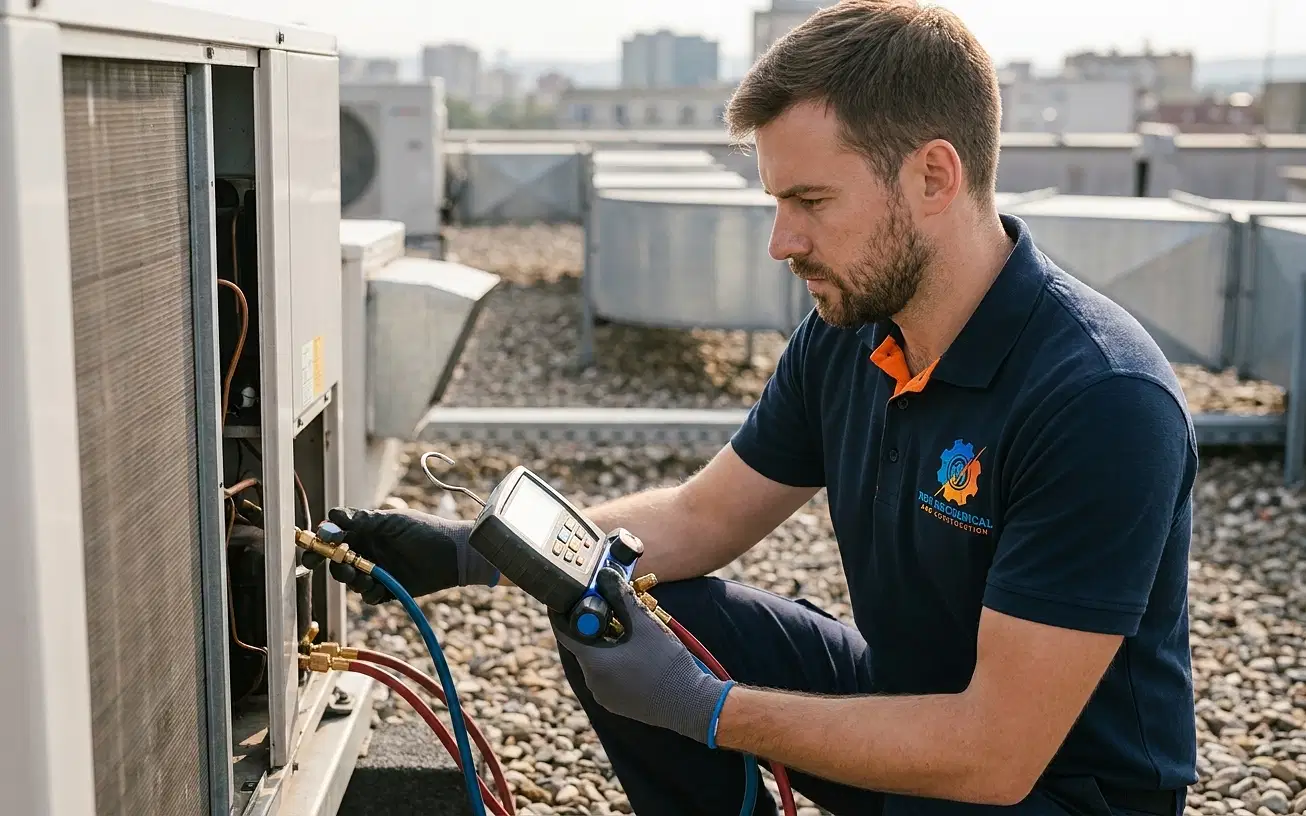
- Refrigerant Level & Pressure Check: Verifying that refrigerant levels are correct for peak efficiency, a critical task for both air conditioning and commercial refrigeration services.
- Thermostat and Control Calibration: Ensuring your system controls are accurate and responsive to maintain consistent temperatures.
- Lubrication of Moving Parts: Reducing friction and wear on motors and bearings to prevent premature failure.
- Detailed Service Report: Providing you with a clear summary of the system's health, any actions taken, and professional recommendations for future repairs or efficiency upgrades.
Protect Your Assets with a Proactive Partner
In the competitive North Texas business landscape, every dollar counts. Shifting your HVACR strategy from reactive to proactive is a proven method for reducing operational costs, protecting your capital investments, and ensuring your business runs smoothly, no matter the weather. Don't wait for a system failure to force your hand.
Contact the experts at RDS Mechanical and Construction today to discuss how our comprehensive mechanical services and tailored maintenance programs can safeguard your business in the Dallas area. Let us help you turn an unpredictable expense into a reliable, high-performing asset.